Targeting Mistakes That Drain Your Budget in Affiliate Campaigns
Targeting rarely looks like the problem — until you try to understand your results.
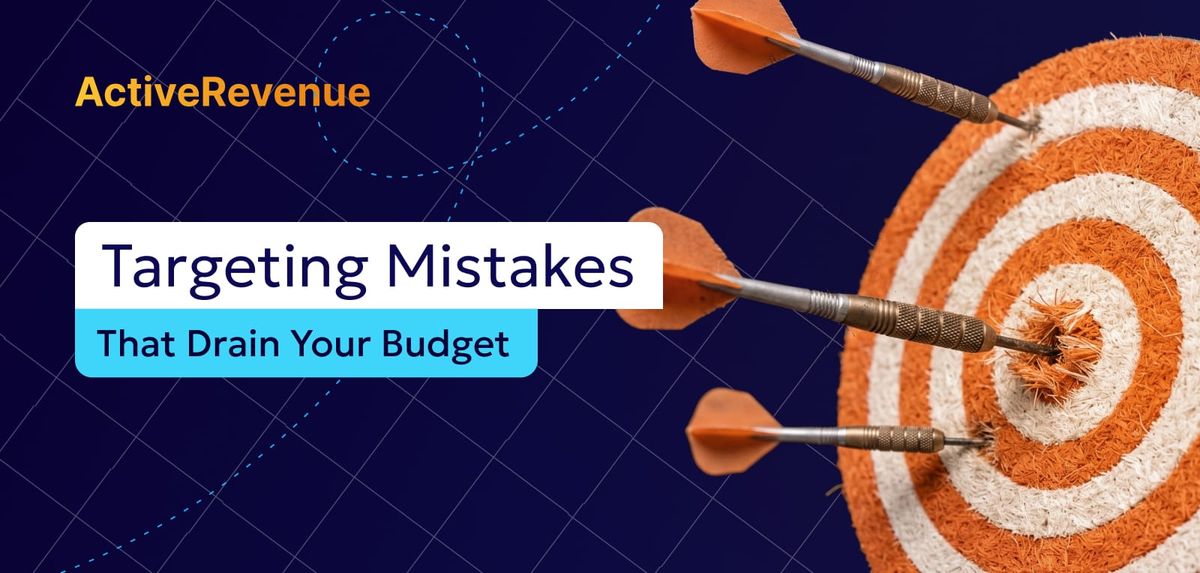
Targeting is one of those things in affiliate marketing campaigns that looks simple on the surface, but quietly decides how your budget is spent. You pick a GEO, choose a device, maybe add a couple of filters, launch the campaign — and it feels like the real work starts after that. In reality, most campaigns are heavily influenced much earlier, at the moment those first targeting decisions are made.
Targeting rarely breaks a campaign in an obvious way. More often, it just makes everything harder to understand.
That’s usually the moment when people start looking at the wrong things — the offer, the traffic source, the vertical — while the issue is still in the setup.
If you look at how targeting is used in many campaigns, there’s a pattern. It’s either too broad to give meaningful signals or too random to understand what’s actually working. The goal isn’t to make targeting more complicated, but to make it more deliberate.
Starting too wide doesn’t give you more data
A common instinct is to start wide and “let the data come in.” In many cases, that approach makes sense — you need enough volume to see patterns.
The problem starts when “wide” turns into “everything at once.”
If you mix multiple GEOs, devices, browsers, and traffic sources in a single setup, the data quickly becomes hard to read — especially in affiliate marketing campaigns where multiple variables change at once. You’re still getting traffic, but it’s no longer clear what is actually driving the results.
For example, if performance looks average, you don’t know where that average is coming from. One GEO might be working while another is draining the budget, or mobile traffic might convert while desktop doesn’t. Without separation, all of that gets blended into one number.
Starting wide can work, but only if there’s structure behind it. If everything runs in parallel without clear segmentation, you usually end up spending more time trying to untangle results than improving them.
GEO is only the starting point
Choosing a GEO is usually the first step in targeting, and it often gets treated as the main one. But in affiliate marketing targeting, a country alone rarely tells the full story. Two campaigns in the same GEO can behave very differently depending on device type, carrier, or even the time of day they run.
That’s why thinking of GEO as a single block can be misleading. It’s more useful to treat it as a starting layer that needs to be refined. Even simple splits, like separating mobile from desktop or Android from iOS, can reveal patterns that aren’t visible in a combined setup.
This becomes especially important in larger or more diverse markets, where user behavior is not consistent across the entire audience. If targeting stops at the country level, a lot of that variation gets lost, and decisions are made on incomplete information.
Device targeting shapes how users behave
Device is often added as a filter, but it has a much deeper impact on traffic performance than it might seem at first. It affects how users see your creatives, how your landing page loads, and how easy it is for them to complete an action.
A flow that feels smooth on Android might break on iOS. A landing page that works on desktop might feel too slow or cluttered on mobile. When everything is grouped together, these differences are easy to miss, and performance looks inconsistent without a clear reason. In many cases, what looks like a traffic problem is actually a device mismatch.
Separating devices early makes it easier to understand what’s actually happening. If one segment performs better, you can adjust the setup specifically for it instead of trying to fix everything at once. It also helps avoid situations where a good segment is dragged down by a weaker one simply because they’re being measured together.
Not all traffic sources perform the same
Within any traffic platform or traffic source, whether you’re working with Pop traffic, Zero Click, Video, or another format, there are always differences between sources. Some sources convert consistently, some need more time, and others simply don’t match your offer or traffic type.
At the start, sources are usually grouped together. Once data starts coming in, they become one of the most important targeting layers.
If everything stays combined, strong and weak sources get mixed, and the overall performance becomes more difficult to interpret. A campaign might look average, while in reality a few good sources are carrying most of the results.
Filtering is what turns that into something usable. As you remove underperforming sources and keep the ones that show potential, you’re not just optimizing — you’re refining your targeting.
This is where targeting doesn’t end at setup. It continues as you shape the traffic you keep.
Timing is an underrated part of targeting
Timing is often overlooked in affiliate marketing targeting, but it can directly affect how a campaign performs. The same setup can produce different results depending on when it runs, because user behavior changes throughout the day and week.
Weekends often look different from weekdays, and even within a single day there can be noticeable shifts between daytime and nighttime activity. Ignoring these patterns doesn’t break a campaign, but it can make it less efficient than it could be. In some cases, timing alone can explain why a campaign looks inconsistent.
You don’t need to optimize for timing from the very beginning, but once data starts coming in, it becomes one of the easiest ways to improve performance. Adjusting schedules, pausing low-performing time slots, or focusing on periods with better results can make a noticeable difference without changing the core setup.
What good targeting actually looks like
Good targeting isn’t about adding more filters — it’s about knowing why each one is there. The goal is not to restrict traffic as much as possible, but to reduce uncertainty and make the results easier to understand.
When targeting is done well, it becomes clear what you’re testing, what you’re keeping, and what you’re cutting. The campaign starts to feel structured instead of random, and decisions become easier to make.
This doesn’t mean everything has to be perfect from the start. It means that as data comes in, you can act on it with confidence instead of guessing. Over time, that’s what protects your budget and makes scaling possible.
Final thoughts
Targeting doesn’t guarantee success, but poor targeting in affiliate marketing campaigns almost always leads to wasted spend. The difference is usually not in the number of settings, but in how deliberately they’re used.
If a campaign isn’t working, it’s worth looking at targeting before changing everything else. Small adjustments here can shift the entire outcome, often without increasing your budget or changing your traffic source.
When you’re running campaigns, focus on targeting you can actually control and adjust. That’s where most of your budget is decided.